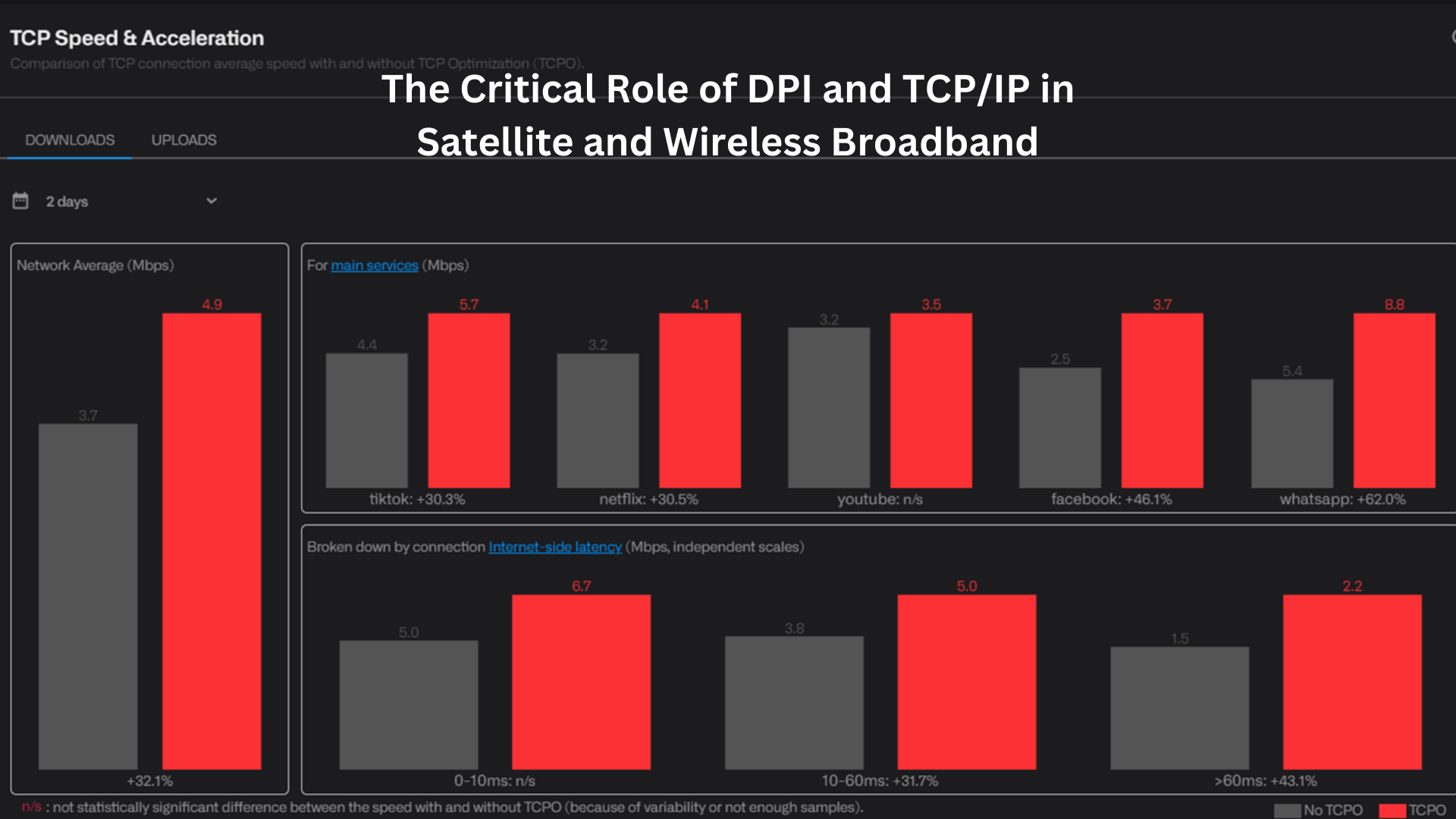
The evolution of global connectivity has increasingly relied on advanced technological frameworks to deliver high-speed, reliable internet access. Among these technologies, Deep Packet Inspection (DPI) and the TCP/IP protocol suite are pivotal. Their roles are particularly crucial in satellite and wireless broadband networks, where unique challenges require robust and flexible solutions. This article explores the significance of DPI and TCP/IP in enhancing satellite and wireless broadband, emphasizing their impact on performance, security, and overall user experience.
Understanding TCP/IP: The Backbone of Internet Communication
The Fundamentals of TCP/IP
The Transmission Control Protocol/Internet Protocol (TCP/IP) suite is the foundation of all Internet communications. TCP/IP enables data exchange between different devices across diverse networks, ensuring interoperability and data integrity.
- Transmission Control Protocol (TCP): TCP ensures reliable data transmission between devices. It divides messages into packets, sends them, and reassembles them at the destination. TCP handles error checking and guarantees that packets are delivered in the correct order, retransmitting any lost packets.
- Internet Protocol (IP): IP is responsible for addressing and routing packets to their destination. It ensures that data sent from one computer arrives at the correct destination by using IP addresses.
The Role of TCP/IP in Broadband Networks
In broadband networks, TCP/IP is essential for maintaining efficient and reliable communication. It manages the flow of data across the network, ensuring that users receive a consistent and high-quality internet experience. Without TCP/IP, the internet as we know it would not function, as it forms the basis for data exchange, enabling web browsing, email, streaming, and other online activities.
Deep Packet Inspection (DPI): Enhancing Network Management and Security
What is DPI?
Deep Packet Inspection (DPI) is an advanced method of examining and managing network traffic. Unlike traditional packet inspection, which only looks at the header information, DPI analyzes the entire data packet, including its payload. This allows network operators to identify the type of traffic, its content, and the application generating it.
Applications of DPI in Broadband Networks
DPI has several critical applications in both satellite and wireless broadband networks:
- Traffic Management: DPI enables network operators to prioritize certain types of traffic, ensuring that essential services receive the bandwidth they need. This is particularly important in networks with limited bandwidth, such as satellite broadband.
- Security: By analyzing packet content, DPI can detect and block malicious traffic, preventing cyber-attacks and unauthorized access. It can also identify and mitigate the spread of malware and other security threats.
- Quality of Service (QoS): DPI helps maintain QoS by managing network congestion and ensuring that latency-sensitive applications, like VoIP and video conferencing, operate smoothly.
- Compliance and Monitoring: DPI allows for the monitoring of network usage to ensure compliance with regulations and policies, such as data usage caps or content restrictions.
The Importance of DPI and TCP/IP in Satellite Broadband
Challenges in Satellite Broadband
Satellite broadband faces unique challenges that make the roles of DPI and TCP/IP particularly important:
- High Latency: Satellite communications typically involve long distances between the earth and satellites, resulting in higher latency compared to terrestrial networks.
- Limited Bandwidth: Bandwidth in satellite networks is often more limited, making efficient data management crucial.
- Variable Signal Quality: Weather conditions and physical obstructions can affect signal quality and reliability.
How TCP/IP Addresses Satellite Broadband Challenges
TCP/IP is instrumental in managing the inherent challenges of satellite broadband:
- Efficient Data Transmission: TCP/IP’s robust error-checking and retransmission mechanisms ensure that data is reliably transmitted even in the presence of latency and signal degradation.
- Congestion Control: TCP’s congestion control algorithms adapt to the varying conditions of satellite links, preventing network congestion and maintaining optimal performance.
- Scalability: IP addressing and routing protocols facilitate the integration of satellite links into broader global networks, enabling seamless connectivity.
The Role of DPI in Satellite Broadband
DPI enhances the performance and security of satellite broadband in several ways:
- Bandwidth Optimization: DPI allows for the prioritization of critical applications and services, ensuring efficient use of limited bandwidth.
- Latency Reduction: By identifying and prioritizing latency-sensitive traffic, DPI helps mitigate the impact of high latency on user experience.
- Enhanced Security: DPI provides robust security measures, identifying and mitigating threats before they impact the network.
The Importance of DPI and TCP/IP in Wireless Broadband
Challenges in Wireless Broadband
Wireless broadband networks also face unique challenges that necessitate the use of DPI and TCP/IP:
- Spectrum Limitations: Wireless networks operate within specific frequency bands, making efficient spectrum usage essential.
- Interference and Congestion: Wireless networks are susceptible to interference from other devices and networks, leading to congestion.
- Mobility: Users in wireless networks are often mobile, requiring seamless handoffs and consistent connectivity.
How TCP/IP Addresses Wireless Broadband Challenges
TCP/IP is critical in managing the complexities of wireless broadband:
- Adaptive Transmission: TCP’s adaptive transmission techniques help manage varying signal conditions and interference, ensuring reliable data delivery.
- Routing and Mobility Support: IP protocols support mobility by enabling dynamic routing and seamless handoffs between different network cells.
- Scalability and Interoperability: TCP/IP provides a scalable framework that supports a wide range of devices and applications, ensuring interoperability in diverse wireless environments.
The Role of DPI in Wireless Broadband
DPI significantly enhances wireless broadband performance and security:
- Traffic Prioritization: DPI enables the prioritization of critical applications, ensuring optimal performance even in congested networks.
- Interference Management: By analyzing traffic patterns, DPI helps manage interference and optimize spectrum usage.
- Security and Compliance: DPI provides advanced security measures, protecting wireless networks from threats and ensuring compliance with regulations.
Case Studies: DPI and TCP/IP in Action
Satellite Broadband: HughesNet
HughesNet, a leading satellite internet service provider, leverages TCP/IP and DPI to enhance its service offerings:
- TCP/IP: HughesNet uses TCP/IP protocols to manage data transmission over its satellite links, ensuring reliable and efficient communication despite the high latency and limited bandwidth of satellite networks.
- DPI: HughesNet employs DPI to prioritize critical applications, optimize bandwidth usage, and enhance security by detecting and mitigating potential threats.
Wireless Broadband: Verizon Wireless
Verizon Wireless, one of the largest wireless carriers in the United States, utilizes TCP/IP and DPI to provide high-quality wireless broadband services:
- TCP/IP: Verizon uses TCP/IP to manage the transmission of data across its extensive wireless network, ensuring seamless connectivity and reliable performance for its users.
- DPI: Verizon employs DPI to optimize network performance, prioritize latency-sensitive applications, and enhance security by identifying and blocking malicious traffic.
The Future of DPI and TCP/IP in Broadband Networks
As technology continues to evolve, the roles of DPI and TCP/IP in broadband networks will become even more critical. Emerging technologies and trends, such as 5G, the Internet of Things (IoT), and increasing demand for high-speed internet, will place greater demands on network performance, security, and reliability.
Advancements in TCP/IP
Future advancements in TCP/IP protocols will focus on:
- Enhanced Congestion Control: Improved algorithms for managing network congestion will help maintain optimal performance in increasingly complex and high-demand environments.
- Greater Scalability: As the number of connected devices grows, TCP/IP will need to support greater scalability and more efficient addressing schemes.
- Improved Mobility Support: Enhancements in mobility support will ensure seamless connectivity for mobile users, even in highly dynamic environments.
Advancements in DPI
Future advancements in DPI technology will focus on:
- Greater Accuracy and Efficiency: Improved algorithms for traffic analysis will enable more accurate identification and prioritization of applications and services.
- Enhanced Security Capabilities: Advanced threat detection and mitigation techniques will provide even greater protection against evolving cyber threats.
- Integration with AI and Machine Learning: The integration of AI and machine learning with DPI will enable more intelligent and adaptive network management, optimizing performance and security in real time.
Conclusion
The roles of DPI and TCP/IP in satellite and wireless broadband networks are indispensable. TCP/IP provides the fundamental framework for reliable and efficient data transmission, while DPI enhances network performance, security, and user experience through advanced traffic analysis and management. As the demand for high-speed, reliable internet continues to grow, the importance of these technologies will only increase, driving ongoing advancements and innovation in broadband connectivity. By understanding and leveraging the capabilities of DPI and TCP/IP, network operators can overcome the unique challenges of satellite and wireless broadband, delivering superior services to users worldwide.